
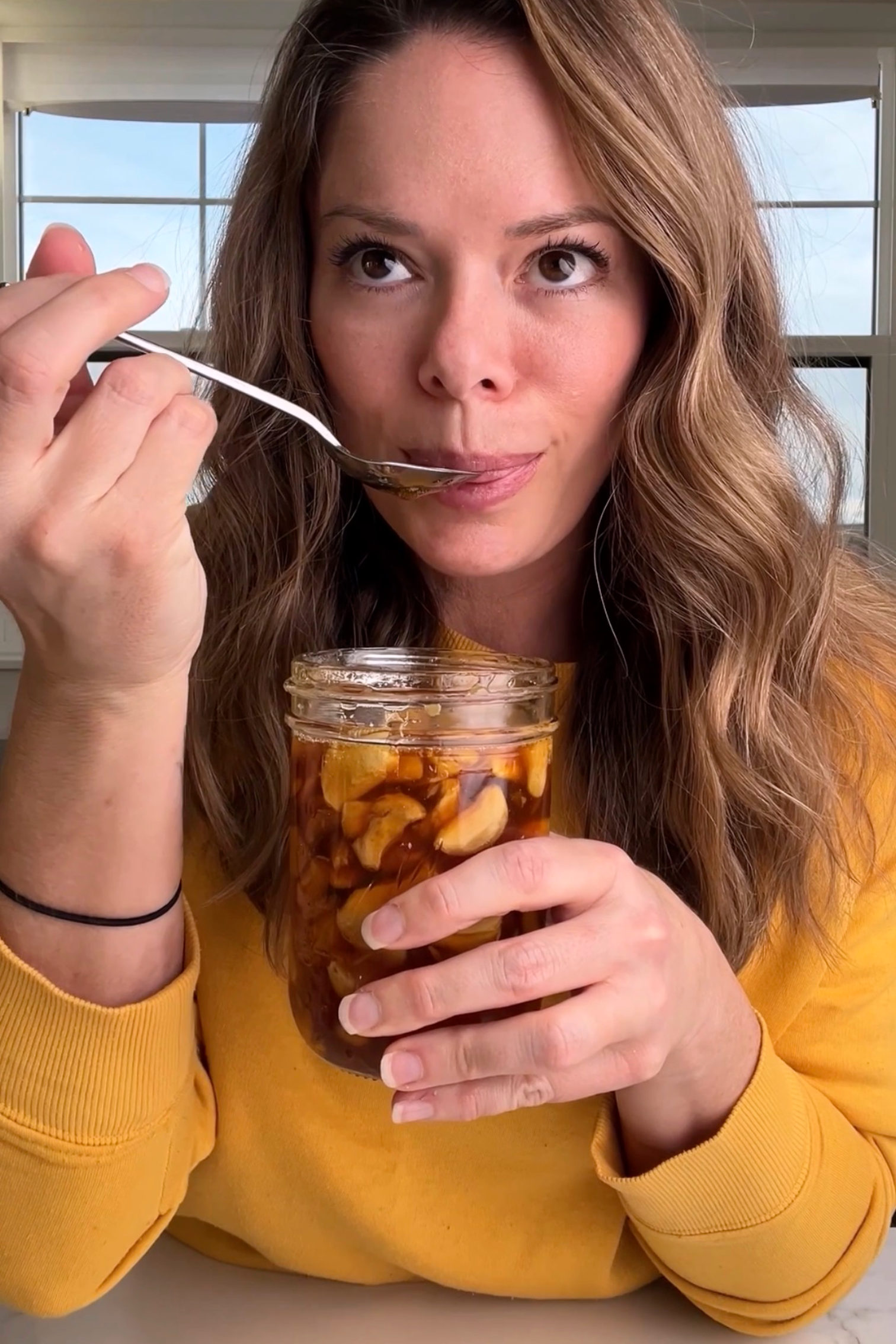
Fermented Garlic Honey
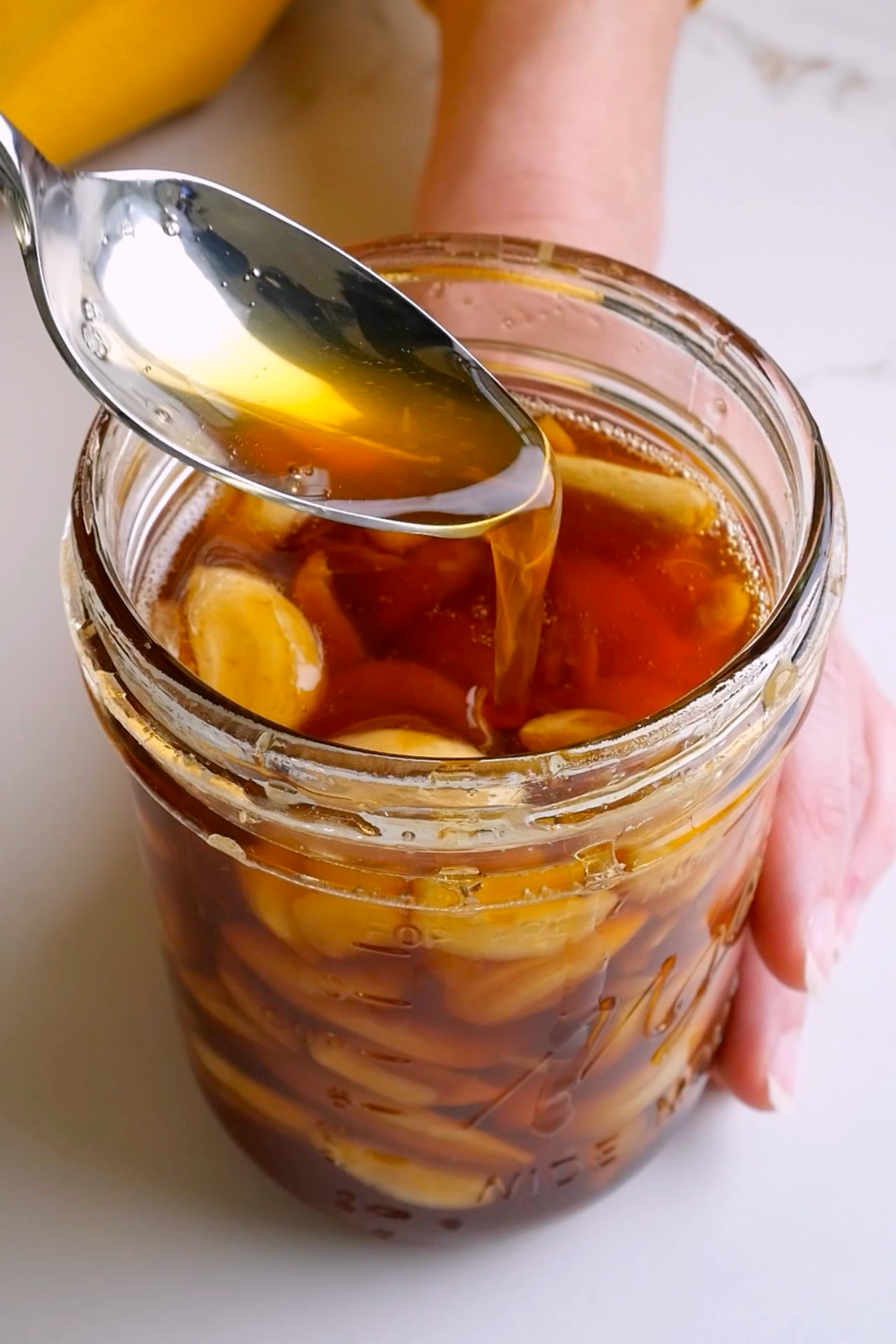
- 1 cup peeled garlic cloves
- 1 cup raw honey (Manuka preferred)
- Wash and dry a clean glass jar thoroughly. A wide-mouth pint (16 oz) jar works well.
- Fill the jar roughly halfway with 1 cup peeled garlic cloves. Gently press down on the cloves to begin releasing their natural juices.
- Pour 1 cup raw honey (Manuka preferred) over the garlic cloves until all cloves are fully coated and submerged. The honey will be thick at first - it thins out as fermentation progresses.
- Place the lid on the jar loosely. Do not tighten it fully! This allows CO₂, produced during fermentation to escape and prevents pressure buildup.
- Once daily (or every other day): tighten the lid, flip the jar upside down, then flip it right-side up again, and loosen the lid slightly. This keeps the cloves coated and distributes CO₂ buildup evenly.
- Continue the daily flip routine for about 30 days. You should see small bubbles forming within 3-7 days. This signals active fermentation! The sweet spot for full flavor and maximum benefit is the 1-month mark.
- After a month, the garlic will be darker, the honey thinner, and the flavor mellow and complex. Garlicky but not harsh. Take by the spoonful, stir into tea, or use in dressings.
- Refrigerate after opening.
- Raw honey is required. Pasteurized honey lacks the live enzymes needed to ferment.
- Manuka honey has significantly higher antibacterial potency due to its MGO (methylglyoxal) content and is worth the upgrade; Costco carries it at a reasonable price.
- Pre-peeled garlic from an Asian grocery store (like H Mart) is a great time-saver. Look for bags around $5.
- The honey will noticeably thin out as fermentation progresses - this is normal.
- Fermentation can continue beyond 30 days for a deeper, more complex flavor.
- Take by the spoonful on its own, add to lemon-ginger tea, or use as a base for salad dressings
- Store at room temperature during the fermentation period; refrigerate after opening
- If you see mold (distinct from bubbles or darkening), discard and start fresh.
Micronutrient Highlights
- Allicin: The primary active compound. Potent antimicrobial and anti-inflammatory
- Selenium & manganese: Trace minerals that support immune function
- Vitamin B6 & Vitamin C: Support immune response and metabolic function
- Enzymes & antioxidants: Preserved only in unprocessed honey, destroyed by heat.
- Hydrogen peroxide: Naturally produced antimicrobial compound
- Fermentation: Increases bioavailability of garlic's beneficial compounds, making them more easily absorbed by the body
Appetizer, condiment, SnackAmerican, health food, Mediterraneanfermented, garlic, honey, preserved